
German Shepherd Exercise Needs by Age
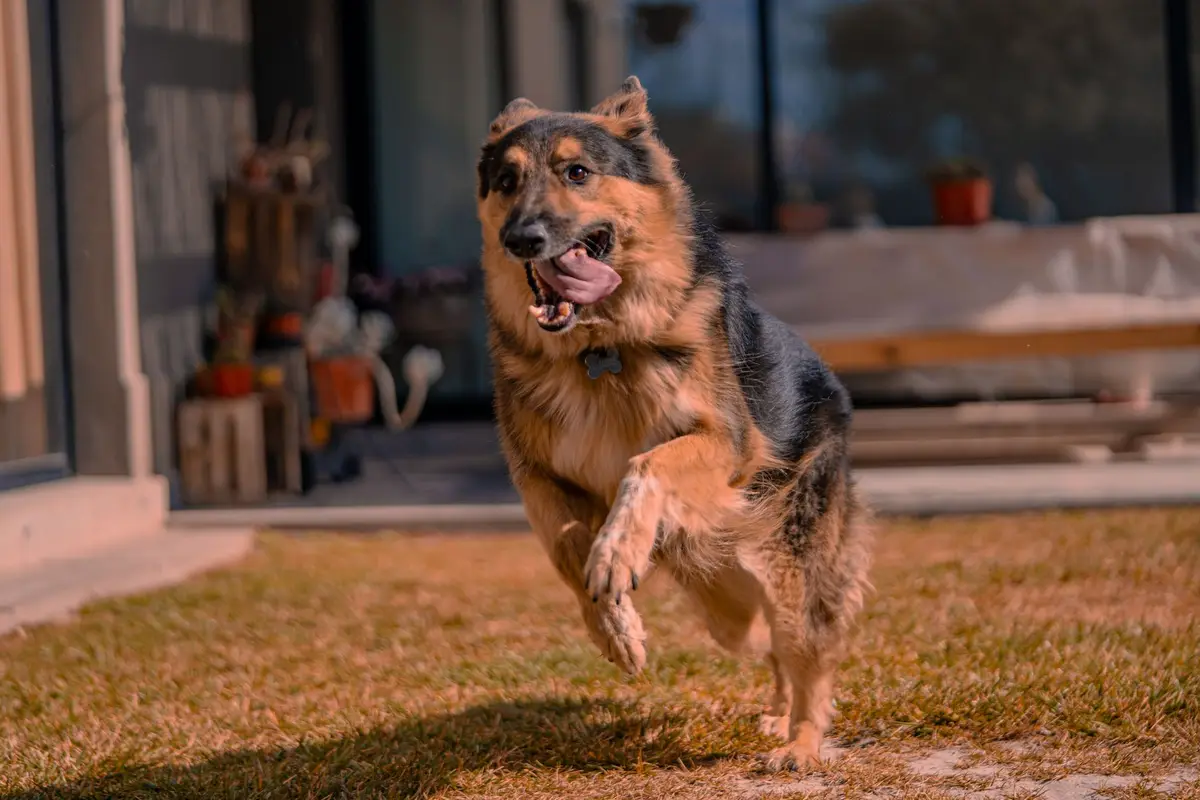
German shepherd exercise needs change more across a lifetime than most owners expect. Here’s the short answer: a healthy adult typically needs 90 minutes to two hours of daily activity, split between physical outlets and genuine mental work. Puppies need far less - and the wrong kind can stress growing joints. Seniors do best with shorter, softer sessions taken more often. The age-by-age table below is the quick reference; the sections around it explain the reasoning, because with a breed this smart and this orthopedically loaded, the why matters as much as the how much.
Why puppy exercise comes with a speed limit
A German Shepherd puppy looks sturdy at four months - big paws, serious ears, opinions about squirrels. The skeleton underneath is still under construction. The long bones of the legs grow from soft cartilage zones near each end called growth plates, and until those plates harden into bone, they’re the structurally weakest point in the whole limb.
That isn’t me being dramatic. The American College of Veterinary Surgeons notes that growth-plate fractures of the tibia show up most often in puppies four to eight months old, particularly in active medium and large breeds - a fair description of most young shepherds. And the AKC’s guidance on puppy exercise is blunt about repetitive, forced exercise: jogging and roadwork aren’t recommended for large breeds until roughly 14 to 18 months, once the plates have fused.
For this breed there’s a second reason to be careful. German Shepherds carry a well-documented risk of hip and elbow dysplasia - the Orthopedic Foundation for Animals has screened the breed for decades precisely because of it. Genetics deals the hand, but environment plays the cards: extra body weight and high-impact, repetitive exercise during growth can make a borderline joint worse. No one can promise a particular puppy sound hips, but you can avoid stacking the deck against them.
So what does safe puppy exercise look like? Mostly, free play. A puppy loose in a fenced yard chooses their own speed, stops when tired, and rarely produces the pounding repetition that worries orthopedic surgeons. Add short sniffy walks on grass, five-to-ten-minute training games, and calm socialization outings, and you’ve covered a young shepherd’s actual needs.
What I’d skip: running alongside a bike or jogger, long leash marches at an adult’s pace, stair sprints, repeated leaps off the deck, and marathon fetch. Fetch is the sneaky one - the puppy will keep going long past sensible, because drive outvotes judgment at that age. It outvotes judgment at most ages, honestly, but at least the adult skeleton can cash the checks.
Growth plates in large breeds tend to close somewhere between 12 and 18 months. If you’re itching to start a running program, ask your vet first - an x-ray can confirm the plates have closed, and that’s a far cheaper conversation than a physeal fracture.
Adult shepherds: the body is the easy part
Once the skeleton finishes, the question flips from “how do I hold this dog back” to “how do I keep up.” Most healthy adult German Shepherds thrive on 90 minutes to two hours of daily activity. Split it - a morning outing plus an evening one beats a single mega-session, and it suits the breed’s fondness for a predictable schedule.
But here’s the thing, and I say it with real affection for these dogs: the body is the easy part. German Shepherds were developed to work all day with a handler - moving sheep, solving problems, taking direction. You can run one for two hours and still have a bored dog, because you exercised the legs and left the brain in the parking lot.
Mental work counts toward the daily total, and for many shepherds it counts double. The options that earn their keep:
- Scent games. Hide a handful of kibble around the house or yard and let the dog work it out. Nose work is honest labor for a dog; many owners find 20 minutes of it settles their shepherd more than an hour of fetch.
- Structured training. Ten to fifteen minutes of obedience, tricks, or rally practice, once or twice a day. The point isn’t the sit - it’s the working partnership. This is a breed that wants a job and a colleague.
- Dog sports. Tracking, scent work trials, herding, agility, competitive obedience. One weekly class plus home practice gives the whole week a spine.
- Food puzzles and snuffle mats. Not a substitute for real work, but a civilized way to make breakfast last longer than nine seconds.
One caution for adults: the weekend-warrior pattern. A shepherd who dozes through the work week and then does a three-hour Saturday hike is set up for soreness and soft-tissue injuries, much like the rest of us. Consistent daily rhythm beats occasional heroics. For more ways to fill that rhythm, our German Shepherd exercise guides go deeper on individual activities.
The age-by-age exercise guide
Screenshot this one. The amounts are starting points for a healthy dog, not prescriptions - build, drive, and health history all move the number, and your vet outranks any table.
| Age | Daily amount | Best activities | Avoid |
|---|---|---|---|
| 8 weeks - 4 months | Several 5-10 minute sessions plus free play | Off-leash play in a safe fenced space, short sniffy walks on grass, name games and basic cues, calm socialization outings | Forced walks at an adult’s pace, stair sprints, jumping off furniture or out of vehicles, any jogging |
| 4 - 8 months | 30-45 minutes total, split across 2-3 outings | Longer sniff walks, recall games, tug with rules, food puzzles, short training sessions | Repetitive fetch on hard ground, running beside a bike, rough play with much larger dogs, big leaps |
| 8 - 18 months | 45-90 minutes, still split | Longer walks, easy hikes on soft footing, swimming, training classes, beginner scent work | Roadwork or jogging until your vet confirms the growth plates have closed, full-height jumping |
| 18 months - 7 years | 90 minutes - 2 hours physical, plus 15-30 minutes of mental work | Running or biking built up gradually, hiking, swimming, scent work, tracking, herding, obedience, agility | Weekend-only exercise spikes, hard exercise in heat, intense activity right before or after meals |
| 7+ years | 30-60 minutes, in 2-3 shorter outings | Leashed sniff walks, swimming, gentle games, easy scent work, trick refreshers | Long runs, leaping for balls, slippery floors, skipping days entirely |
Two notes on reading it. First, the age ranges overlap on purpose - a leggy 10-month-old and a compact 14-month-old can be at the same skeletal stage, which is why “ask your vet” keeps showing up. Second, that meal-timing caution in the adult row reflects standard advice for deep-chested breeds, where bloat is a known concern; our German Shepherd health section covers what that means in practice.
Senior shepherds: shorter, softer, more often
Somewhere around seven or eight, most German Shepherds start negotiating. The drive is often still there - the joints just vote differently. Arthritis is common in the breed’s later years, frequently layered on top of those same hips and elbows; VCA Animal Hospitals notes that weight control and sensible, regular exercise are two of the most useful levers owners have for dysplastic joints.
The senior formula: shorter, softer, more often. Two or three 15-20 minute outings beat one long haul. Sniff walks are ideal - let the nose set the route and the pace, since sniffing is real mental work at an age when the mind still wants employment. Swimming, where you can get it, is about as joint-friendly as exercise gets. Gentle trick refreshers keep the training relationship alive without asking anything of the elbows.
Keep the weight down, and keep the routine daily. For a stiff dog, motion helps - but in doses, not binges. Watch for stiffness after rest, hesitation on stairs, lagging in the second half of a walk, or a dog who stops enjoying things they used to love. Those are vet conversations, not retirement notices; pain management for older dogs has come a long way. Our German Shepherd lifecycle guide covers what else shifts in the senior years.
How to tell when the balance is off
An under-exercised German Shepherd rarely suffers in silence. The classic signs: destructive chewing, digging, pacing, demand barking, hard leash-pulling, and restless evenings right when the household wants to wind down. In this breed, a large share of “behavior problems” are really employment problems.
Overdoing it is quieter. Look for next-day stiffness, paw or joint licking after hard sessions, a dog who lags on routes they used to lead, or reluctance to load up for the next outing. Soreness that lingers past a day of rest belongs in front of your vet.
If the boredom list sounds familiar, run a two-week experiment: add one short training session and one scent game per day, keep the physical exercise steady, and watch what happens. Many owners find the chewing and pacing fade before the fortnight is out - not because the dog got tired, but because the dog finally got hired. For the bigger picture on the breed, start at our German Shepherd health hub.
So here’s my question for you: when your shepherd flops down tonight, will it be the satisfied flop of a dog whose legs and brain both did a day’s work - or the resigned sigh of one still waiting for a job offer? Watch the flop. It will tell you more about your exercise plan than any table I can write.
Frequently asked questions
How much exercise does a German Shepherd need every day?
Most healthy adults do well with 90 minutes to two hours of daily activity, split into at least two sessions and paired with 15-30 minutes of mental work such as training or scent games. Working-line dogs often want more; seniors want less. A shepherd who settles calmly in the evening is usually getting enough.
How much exercise can a German Shepherd puppy have?
Think several short sessions rather than one long outing: free play where the puppy sets the pace, brief sniffy walks on grass, and five-to-ten-minute training games. Skip forced running until the growth plates close, which in large breeds tends to happen between 12 and 18 months. Your vet can advise on your puppy's timeline.
When can I start running or biking with my German Shepherd?
The AKC advises against jogging or roadwork with large-breed dogs until roughly 14 to 18 months of age, once the growth plates have fused. After that, build distance gradually on softer surfaces and watch for lagging or next-day stiffness. If you want certainty, ask your vet - an x-ray can confirm the plates have closed.
What mental stimulation does a German Shepherd need?
This breed was developed to work with a handler, so structured jobs beat random toys. Ten to fifteen minutes of obedience or trick training, scent games like find-the-treat, food puzzles at mealtimes, and dog sports such as tracking or rally all count. Many owners find 20 minutes of nose work settles their dog more than an hour of fetch.
How should I exercise a senior German Shepherd?
Shift to shorter, more frequent, low-impact outings: leashed sniff walks, swimming where available, and gentle training refreshers. Keep the routine daily, since long rest followed by a big weekend is hard on arthritic joints. If your dog is stiff after activity or reluctant to rise, bring it to your vet rather than simply cutting exercise.
What are the signs my German Shepherd is not getting enough exercise?
Destructive chewing, digging, pacing, demand barking, hard leash-pulling, and restless evenings are the classics. In this breed, boredom often looks like bad behavior. Before assuming a training problem, try a week of added structured exercise plus daily mental work and see what changes.
Sources
- American Kennel Club - How Much Exercise Does a Puppy Need? Mental and Physical Exercises
- American Kennel Club - Puppy Growth Chart: When Does My Puppy Finish Growing?
- American College of Veterinary Surgeons - Tibial Fractures in Growing Dogs
- Orthopedic Foundation for Animals - Hip Dysplasia
- VCA Animal Hospitals - Hip Dysplasia in Dogs
← German Shepherd Exercise & Activity · Full German Shepherd guide