
German Shepherd Health & Wellness
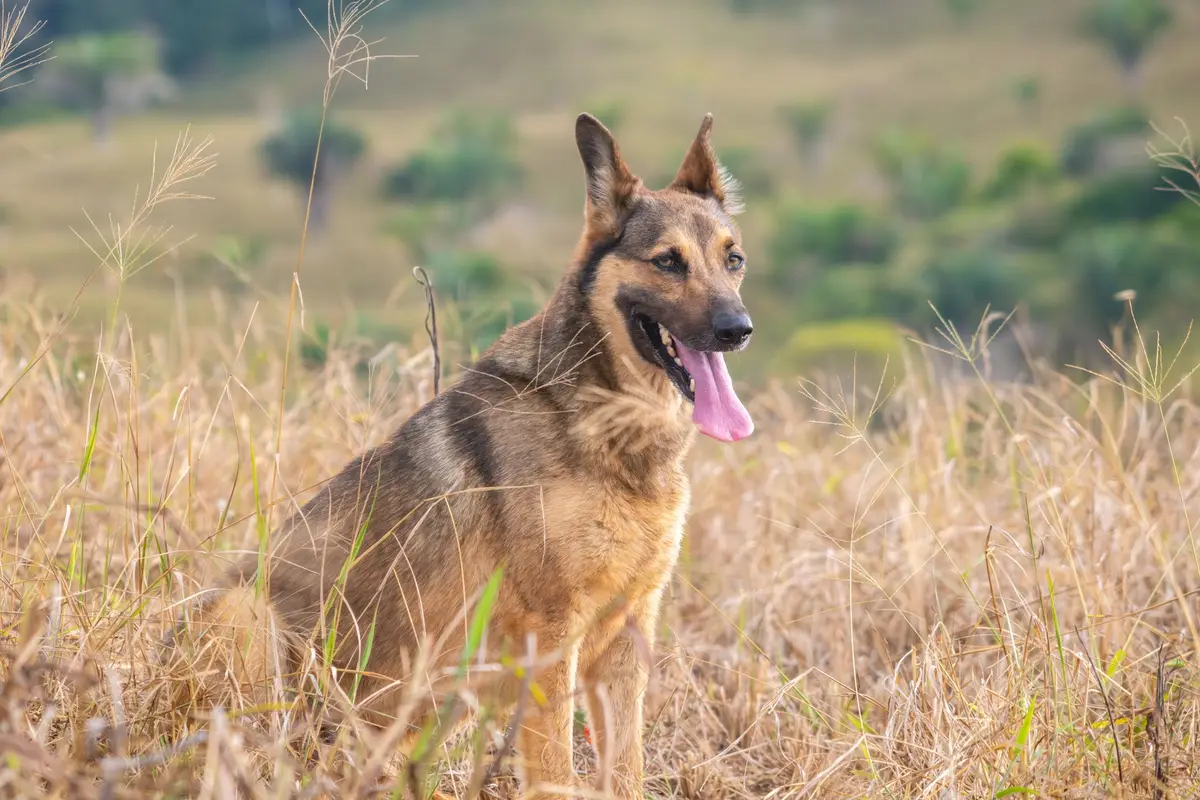
This article is for general information and is not veterinary advice. It has not yet been reviewed by a veterinarian. For anything involving your own dog's health, symptoms, diet, or medication, talk to your vet - they know your dog.
Ask a room of vets which breed they picture when someone says “hip dysplasia,” and most of them picture a German Shepherd. It is not entirely fair to the breed, but it is not entirely wrong either. German Shepherd health issues tend to cluster in five areas: hip and elbow dysplasia, degenerative myelopathy, bloat, a digestive condition called EPI, and allergic skin disease. That is the short answer, and the rest of this page unpacks it - what each condition looks like, when it tends to appear, and when to pick up the phone and call your vet.
One thing before we start. A list of what can go wrong reads scarier than it should. Most Shepherds live long, athletic lives, and none of these conditions is a certainty for your dog. The goal here is pattern recognition, not worry.
This guide is educational, not veterinary advice. For anything involving your own dog’s symptoms, your vet knows the patient and I do not.
Bred to work, and it shows
The German Shepherd was developed in the late 1800s as a herding and all-purpose working dog, and the blueprint still runs the show. Per the AKC breed profile, males stand 24 to 26 inches and weigh 65 to 90 pounds, females a bit less, with a listed life expectancy of 12 to 14 years.
What the stat block does not tell you is the brain. This is a dog built to notice things, solve problems, and stay on task for hours. Give that brain nothing to do and it will invent a job, and you will probably not like the job it picks. Daily physical outlets matter - our guide to German Shepherd exercise breaks down how much and what kind by age - but mental work counts just as much. Ten minutes of scent games or structured training can settle a Shepherd in a way a third walk often cannot.
The working heritage also explains most of the health story. A big, deep-chested, fast-growing athlete carries predictable risks: joints under load, a chest shape associated with bloat, and a genome that a century of popularity has stocked with a few known troublemakers. Which brings us to the list.
The five conditions worth knowing cold
Here is the at-a-glance version. The sections below add the detail, and our German Shepherd health hub goes deeper on each condition.
| Condition | What it is | Early signs | When to call the vet |
|---|---|---|---|
| Hip & elbow dysplasia | Loose or malformed joints that wear into arthritis | Bunny-hopping, stiffness after rest, avoiding stairs | Soon - at the first sign of stiffness or gait change |
| Degenerative myelopathy (DM) | Progressive, painless spinal cord disease, usually after age 8 | Hind-paw scuffing, worn rear toenails, wobbly back end | Soon - any hind-end weakness deserves an exam |
| Bloat (GDV) | Stomach fills with gas and can twist | Tight belly, retching with nothing coming up, pacing, drooling | Now - this is an emergency, go to the nearest open hospital |
| EPI | Pancreas stops making enough digestive enzymes | Ravenous appetite with weight loss, large pale greasy stools | Soon - ask about a TLI blood test |
| Allergic skin disease | Overreactive immune response to fleas, food, or environment | Paw licking, recurring ear infections, itchy belly and armpits | At the next appointment, sooner if skin is raw or ears smell |
Hip and elbow dysplasia start early and show up late
Dysplasia means the joint formed loose or uneven, so the parts grind where they should glide. It begins during puppyhood growth, but many dogs hide it until arthritis sets in years later. The Orthopedic Foundation for Animals notes it is the most common inherited orthopedic problem in dogs, and German Shepherds sit high in its screening statistics. Genetics load the gun, but weight and growth rate influence how bad it gets, per the American College of Veterinary Surgeons.
That last part is good news, because you control the food bowl. A lean Shepherd on an appropriate large-breed diet puts less strain on imperfect joints - our German Shepherd nutrition guide covers what that looks like in practice. If you are buying a puppy, ask the breeder for OFA hip and elbow results on both parents. The OFA’s breed-specific testing lists show exactly which screens the parent club recommends.
Degenerative myelopathy is slow, quiet, and worth testing for
DM is the one that catches owners off guard, because it does not hurt. Somewhere around age eight or later, the nerves of the spinal cord begin to degenerate, and the first signs are subtle: a hind paw that scuffs, rear toenails worn oddly, a back end that sways on smooth floors. Cornell’s Riney Canine Health Center describes the typical course as progressive weakness moving toward paralysis over months to a couple of years.
There is no cure, and I will not pretend otherwise. But there is a cheek-swab DNA test for the SOD1 mutation associated with the disease, described in this AKC overview, and knowing your dog’s status helps you and your vet read any future wobble correctly. Hind-end weakness has several look-alike causes, including treatable ones, so a proper workup matters more here than almost anywhere else.
Bloat is the one true emergency on this list
Gastric dilatation-volvulus, or GDV, is what happens when the stomach fills with gas and then twists on itself, cutting off its own blood supply. Deep-chested large breeds like the German Shepherd are the classic risk profile, according to the American College of Veterinary Surgeons, and a twisted stomach can turn fatal within hours without surgery.
Memorize the signs: a swollen or drum-tight belly, retching that produces nothing, sudden pacing and restlessness, heavy drooling. If you see that picture, go now - not after a phone consultation, not in the morning. The AKC’s bloat guide is a good one-page refresher for the whole household. Risk-reduction habits like splitting meals and avoiding hard exercise right after eating are covered in our preventative care hub, and for high-risk dogs some vets discuss a preventive gastropexy, which tacks the stomach in place. Ask yours what they think for your dog.
EPI can leave a well-fed Shepherd starving
Exocrine pancreatic insufficiency is a strange one to watch: the dog eats like a wolf, begs constantly, maybe raids the trash, and loses weight anyway. Stools come out large, pale, and greasy. The mechanism is simple enough - the pancreas has stopped producing the enzymes that digest food, so most of each meal passes straight through. The Merck Veterinary Manual identifies pancreatic acinar atrophy as the usual cause in German Shepherds, one of the breeds most associated with the condition.
The hopeful part: a single blood test (TLI) can diagnose it, and most dogs respond well once their vet prescribes enzyme replacement with meals. Many also need B12 support, which the same workup will catch. Even Shepherds without EPI tend to run sensitive in the gut, so if yours produces impressive quantities of unimpressive stool, the diet section of our nutrition guide is worth your time - and persistent diarrhea or weight loss is vet territory, not tinkering territory.
Itchy skin and dirty ears usually trace back to allergies
If your Shepherd licks its paws like a lollipop, gets ear infections on repeat, or scratches its belly raw every August, you are probably looking at allergic skin disease. The Merck Veterinary Manual groups the usual suspects into fleas, food, and environmental allergens like pollens and dust mites, and sorting out which one takes patience and a methodical vet.
What you can do at home is keep the coat and skin easy to monitor. That famous double coat sheds year-round and blows out twice a year, and regular brushing doubles as a skin inspection - our grooming guide lays out a routine that many owners find keeps both the fur and the surprises manageable. Ears deserve their own habit; upright ears ventilate better than droopy ones, but allergy-prone dogs still grow infections in them, and our dental and ear care hub covers what a healthy ear should look and smell like.
What to watch at each life stage
The five conditions above do not arrive on the same schedule. Here is how the watch list shifts as your dog ages - and if you want the full version, our lifecycle guide tracks the breed from eight weeks to the senior years.
Puppy to about 18 months. This is joint-protection season. Growth plates are open, so keep exercise frequent but low-impact: no forced running, no repetitive stair sprints, no jumping off the truck bed. Feed a large-breed puppy formula so growth stays slow and steady. It is also the window for training and socialization, which for this breed is a wellness item, not an extra.
Adult, roughly 2 to 6 years. The job now is maintenance. Keep weight lean enough that you can feel ribs easily, keep the working brain employed, and build the boring habits - dental care, ear checks, parasite prevention, an annual exam. This is also when allergies and sensitive digestion most often declare themselves, so track patterns rather than dismissing one-off flare-ups.
Senior, from about age 7. Large breeds age faster than small ones, and most vets treat seven as the start of the senior conversation. Ask about twice-yearly visits and senior bloodwork. Watch for stiffness that lingers, hind-paw scuffing, and changes in stamina, and report them rather than filing them under “just getting old.” Slowing down is normal; a dragging paw is a symptom.
Our free German Shepherd health and screening checklist condenses all of this into one printable page, organized by age, if you would rather have it on the fridge than in a browser tab.
Where to go from here
Each topic on this page has a full guide behind it: health conditions, nutrition, exercise, grooming, training, preventative care, dental and ear care, and the life-stage timeline. The German Shepherd Dog Club of America is also worth bookmarking as the parent club’s home for breed health resources. And if there is a Rottweiler sharing your couch, our Rottweiler hub covers much of the same big-dog ground, from joints to bloat.
Owning a Shepherd means living with a dog that watches you as closely as you watch it. So turn the tables and watch back, because with this breed the early signs are quiet and the payoff for catching them is real.
Now I am curious about yours. What is at the top of your watch list - the hips, the gut, or those radar-dish ears?
Every part of German Shepherd care, in one place
-
German Shepherd Exercise & Activity
1 guide published
German Shepherd health FAQ
What are the most common German Shepherd health problems?
The conditions that show up most often in this breed are hip and elbow dysplasia, degenerative myelopathy, bloat (GDV), exocrine pancreatic insufficiency (EPI), and allergic skin disease. Not one of them is a given for any individual dog. Knowing the early signs of each, and screening where tests exist, is the most useful thing an owner can do.
How long do German Shepherds live?
The AKC lists a life expectancy of 12 to 14 years for the breed, though large dogs in general tend to age faster than small ones. Keeping your Shepherd lean, staying on top of preventative care, and catching joint trouble early are the levers most owners can actually pull to help those later years stay comfortable.
How do I know if my German Shepherd has hip dysplasia?
Watch for a bunny-hopping run, stiffness after rest, reluctance on stairs, or a dog that tires sooner than usual on walks. Signs can start in dogs under a year old or appear later as arthritis develops. Your vet can confirm it with an orthopedic exam and hip X-rays, so mention any of these changes at your next visit.
What is degenerative myelopathy in German Shepherds?
Degenerative myelopathy (DM) is a progressive, painless spinal cord disease that usually appears in dogs eight years or older, starting as hind-end weakness and dragging or scuffing of the rear paws. It is linked to a mutation in the SOD1 gene, and a DNA test can tell you whether your dog carries it. There is no cure, so care focuses on mobility support and keeping the dog engaged.
What are the signs of bloat in a German Shepherd?
The classic signs are a swollen or tight belly, retching without bringing anything up, sudden restlessness or pacing, heavy drooling, and obvious discomfort. Bloat (GDV) can become life-threatening within hours. If you see these signs, call the nearest open veterinary hospital and go immediately rather than waiting to see if it passes.
Why does my German Shepherd have chronic diarrhea and weight loss?
German Shepherds are one of the breeds most associated with exocrine pancreatic insufficiency (EPI), where the pancreas stops making enough digestive enzymes. The tell-tale pattern is a ravenous dog that loses weight anyway and passes large, pale, greasy stools. A blood test (TLI) can diagnose it, and most dogs do well once a vet starts enzyme replacement.
When is a German Shepherd considered a senior?
Most vets treat large breeds like the German Shepherd as seniors from around age seven. That is a good point to ask about twice-yearly checkups, senior bloodwork, and adjustments to diet and exercise. Age itself is not a disease, but earlier checks give you more room to act on whatever turns up.
What health tests should German Shepherd breeders do?
The parent club's recommended screens include OFA evaluations of hips and elbows, plus DNA testing for degenerative myelopathy. A responsible breeder can show you these results for both parents, not just tell you about them. If you are buying a puppy, asking for the paperwork is fair and expected.
Sources
- Orthopedic Foundation for Animals - Hip Dysplasia
- Cornell Riney Canine Health Center - Degenerative Myelopathy
- American College of Veterinary Surgeons - Gastric Dilatation-Volvulus
- Merck Veterinary Manual - Exocrine Pancreatic Insufficiency in Dogs and Cats
- Merck Veterinary Manual - Allergies in Dogs
- American Kennel Club - German Shepherd Dog Breed Information