
Dachshund Health & Wellness
This article is for general information and is not veterinary advice. It has not yet been reviewed by a veterinarian. For anything involving your own dog's health, symptoms, diet, or medication, talk to your vet - they know your dog.
Dachshund health problems cluster around four things: the back, the waistline, the teeth, and the knees. That is the short answer. The back - intervertebral disc disease, or IVDD - is the one that earns the breed its reputation, and it deserves real respect. The other three are quieter, more common across all small dogs, and heavily influenced by the one lever you control completely: how much your dachshund weighs.
Here is my bias, stated up front. I think dachshunds are one of the most underestimated dogs in the business of being a dog. People see the silhouette and file it under couch ornament. Owners know better. This is a hunting breed that will hike for an hour, argue with a hose, and then excavate a flower bed to celebrate. The point of learning the health list is not to shrink that life down to a padded room. It is to learn the real rules so you can stop worrying about the fake ones.
The usual disclaimer applies, and I mean it: this page is educational, not veterinary advice. Your vet knows your actual dog.
A hunting dog that happens to be shaped like this
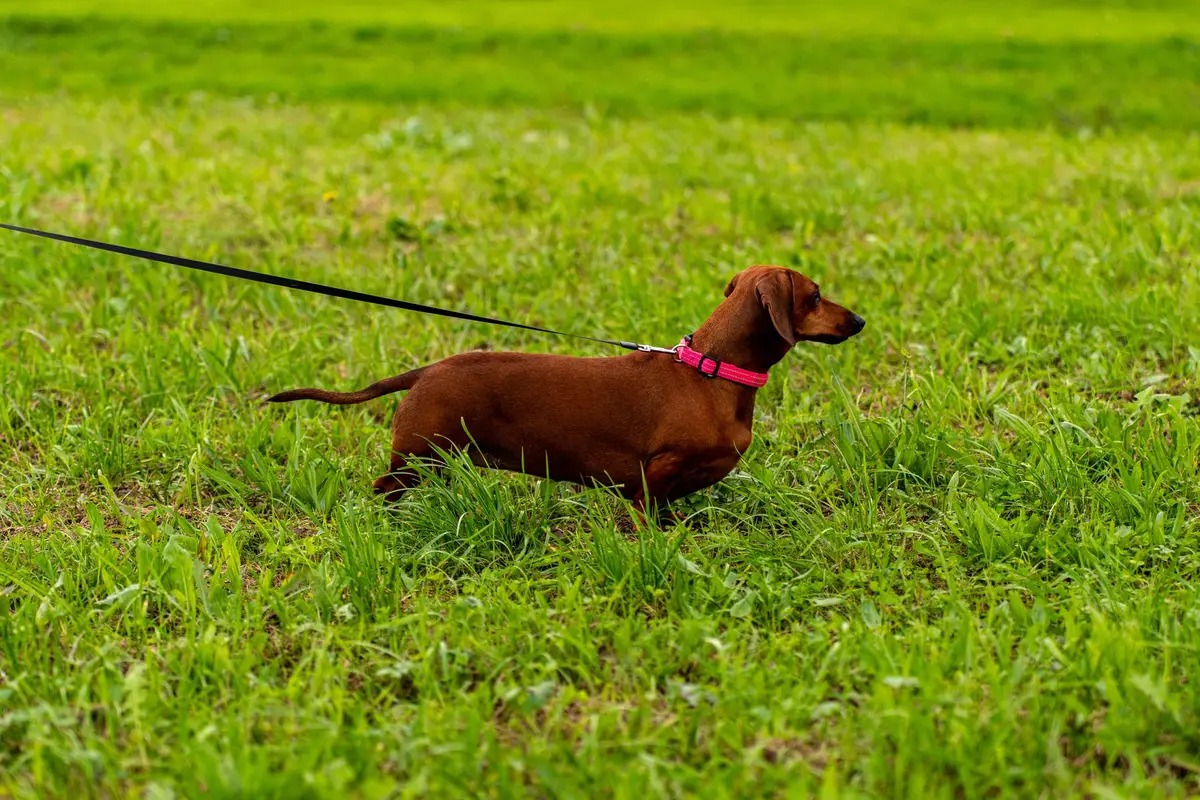
The dachshund was bred in Germany to follow badgers into their tunnels, and every odd-looking feature is functional: short legs for digging, a long flexible body for underground work, a chest like a barrel for lung capacity, and a bark sized for a much larger animal so the hunter above ground could hear it. Per the AKC breed profile, standards run 16 to 32 pounds, miniatures 11 pounds and under, with a life expectancy of 12 to 16 years.
That lifespan number is worth pausing on. Twelve to sixteen years is a long partnership, and most dachshunds spend nearly all of it as sturdy, opinionated little athletes. The health story below is not a list of what will happen to your dog. It is a map of where the breed’s risks concentrate, so you can spot trouble early - because with this breed, early matters more than almost anything else.
The back is the headline, so let’s take it seriously
Dachshunds are chondrodystrophic, which is the clinical way of saying the same gene that gives them those short legs also changes how their spinal discs age. In most dogs, the cushioning discs between the vertebrae stay gel-like for years. In dachshunds, those discs harden and often calcify early - sometimes within the first couple of years of life. A hardened disc loses its shock absorption, and under ordinary everyday load it can rupture and press on the spinal cord. That event is intervertebral disc disease, and the American College of Veterinary Surgeons names the dachshund as the breed most commonly affected.
Note what is not on the list of causes: the long back itself is not a fragile design flaw waiting to snap. The problem is disc chemistry, not chassis length. That distinction changes how you manage it. You are not protecting glass; you are protecting a well-built athlete whose shock absorbers wear out early.
How common is it? The UK Dachshund Breed Council’s IVDD program - the closest thing the breed has to a dedicated research clearinghouse - estimates around 1 in 4 dachshunds may be affected at some stage of life, most often in early middle age. That number sounds grim until you read the other half: many dogs recover well, especially when owners act fast. Speed is the whole game.
What early IVDD actually looks like
Pain almost always arrives before weakness, and dachshund pain is easy to miss because the breed is stoic about everything except dinner being late. The early picture, described in the Merck Veterinary Manual’s overview of spinal disorders, tends to include reluctance to move or jump, a hunched or arched back, a tense belly, shivering or trembling, and crying out when picked up or touched along the spine.
A dachshund that suddenly will not jump onto the couch it has claimed for six years is not being moody. That is a symptom. So is a low or still tail on a dog that normally signals like an airport marshal.
Here is the at-a-glance version. Screenshot it, print it, tape it inside a cabinet.
| Urgency tier | What you’re seeing | What to do |
|---|---|---|
| Watch | Mild stiffness after hard play that resolves within a day; brief hesitation at a jump; nothing else abnormal | Enforce a couple of quiet days, note the date, and mention it at your next vet visit |
| Call your vet today | Yelping when picked up or touched; arched or hunched back; shivering; refusing stairs or jumps; tense belly; unusually still or hiding | Same-day call, strict crate rest until seen - no jumping, no stairs, leash only for bathroom trips |
| Emergency - go now | Wobbly or drunken gait; paws knuckling under; dragging one or both back legs; sudden inability to stand; loss of bladder or bowel control | Go to the nearest open veterinary hospital immediately, day or night |
Sudden hind-leg weakness is an emergency, full stop
No jokes in this section. If your dachshund’s back legs suddenly go wobbly, cross or knuckle under, or stop working - or if your dog loses bladder control along with leg function - go to a veterinary hospital now. Not in the morning. Not after a phone consult. Now.
The reason is timing. When a ruptured disc compresses the spinal cord, the odds of walking again are strongly tied to how much function remains when treatment starts. The ACVS reports that dogs still able to feel their toes have a good prognosis with prompt surgery, and that prognosis drops sharply once deep pain sensation is lost. Hours matter. Carry your dog to the car supporting chest and hindquarters, keep them as still as you can, and drive.
If cost is on your mind in that moment, go anyway and say so out loud at the desk. Emergency vets navigate this daily, conservative treatment paths exist for some cases, and no option gets better by waiting at home.
Weight is the one lever you fully control
I will be straight with you: most of the dachshund back injuries that owners could have influenced trace back to the same two words, and the words are not “jumped once.” They are “carrying extra.” Excess weight loads a spine whose discs are already aging early, strains the knees we will get to shortly, and quietly shortens that 12-to-16-year runway.
The complication is that you are negotiating with a hound. Dachshunds are professionally food-motivated - it is a feature, bred in, and it makes them a joy to train. It also means your dog will lobby for seconds with the commitment of a lawyer on billable hours. The house rule that works is portioned, not banned: measure meals, count treats as part of the daily ration, and break training treats into pea-sized pieces because a dachshund cares about frequency, not volume. Our dachshund nutrition guide covers how to set portions and pick foods for a small hound that believes it is starving.
The check takes ten seconds. Ribs should be easy to feel under light pressure, and from above you should see a waist tuck behind the ribcage. If your dachshund is more draft-stopper than dog, adjust the bowl before you adjust anything else.
The other half of weight control is movement, and this is where the breed surprises people. A healthy adult dachshund thrives on real daily walks and sniff-heavy exploration - this is a scent hound, and a slow walk with a working nose tires them out beautifully. Muscle matters too: a fit, well-muscled back is a supported back. The dachshund exercise guide breaks down how much activity fits each age and how to keep it back-friendly without keeping it boring.
Small mouth, crowded teeth, real consequences
Dental disease is the least dramatic item on this list and the one your vet will bring up first. Small breeds fit a full set of 42 teeth into a small jaw, crowding traps plaque, and the Merck Veterinary Manual notes that periodontal disease - infection and inflammation of the tissues holding teeth in place - is among the most common conditions in dogs, with small breeds hit hardest.
Untreated, it costs teeth, causes chronic pain that dogs hide well, and adds bacteria load the rest of the body has to deal with. The fix is unglamorous: brushing, ideally daily, plus professional cleanings when your vet calls for them. Most dachshunds can be bribed into tolerating a toothbrush, because see above regarding food motivation. Our dental and ear care hub walks through building the habit with a dog that has opinions, and covers those long velvet ears while it is at it.
The knee thing owners mistake for a cute quirk
Watch a dachshund trot across the park and occasionally skip - three legs for a few strides, then back to four like nothing happened. Owners often read it as a funny walk. It is usually a luxating patella: a kneecap slipping out of its groove, most often toward the inside of the leg. The ACVS lists it among the most common orthopedic conditions in small breeds.
Vets grade it 1 through 4. Low grades often need nothing more than monitoring and - here is that word again - lean body weight, since every extra pound pushes the kneecap harder. Higher grades can need surgery. Either way it is a diagnosis you want on the record, so mention any skipping at your next appointment and let your vet feel the knees. The dachshund health hub goes deeper on patella grades and the rest of the breed’s medical file, including the eye and heart screens breeders should be doing.
A back-safe home that is not a padded cell
You do not need to bubble-wrap a dachshund. You need to change a handful of defaults, once, and let the house do the protecting.
Ramps beat jumps. The single highest-value change is a ramp to the couch and another to the bed, because furniture-height jumping down is the repeated hard landing a dachshund spine does not need hundreds of times a year. Buy or build a ramp with a gentle slope and grippy surface, then teach it with treats - most food-driven hounds learn ramps in a weekend. Our training guide has a step-by-step ramp protocol, along with the recall and impulse-control work that keeps a stubborn hound safe off the couch too.
Stairs get a judgment call. A few carpeted steps in daily life are fine for many healthy adults. Full flights, slick wood stairs, and puppies or seniors are a different story - gate them and carry when in doubt.
Carry like you mean it. One hand under the chest, one supporting the rear, spine level, dog held against your body. Teach kids the same hold, and give them a no-scooping rule: an adult hands the dog over.
Traction everywhere the zoomies happen. Runners and rugs on slick floors keep a fast-cornering hound from wipeouts, and keeping nails short protects gait and posture more than most people realize - the grooming guide covers nail routines for all three coat types.
Our free back-safe home checklist for Dachshund owners condenses all of this into one printable page, room by room, if you want it on the fridge rather than in a tab.
What changes as the years add up
A dachshund puppy needs jump discipline before it needs anything else, because habits set at eight months are the ones you will not be fighting at eight years. Adults need the weight held lean, the teeth brushed, and an annual exam where you actually mention the small stuff - the skip in the trot, the one-day stiffness, the hesitation at the ramp. Seniors earn twice-yearly checkups and a slower, sniffier version of the same walks they have loved all along. The lifecycle guide maps the whole arc, and the preventative care hub covers the screening and vet-visit rhythm that catches problems while they are still small ones.
That is the honest picture of dachshund health: one serious risk you learn cold, three ordinary ones you manage with a food scale and a toothbrush, and a dog that pays you back with a decade and a half of loud, low-slung adventure.
So tell me about yours - is the current negotiation at your house about the ramp, the portion size, or whatever it is they think lives under the shed?
Every part of Dachshund care, in one place
Dachshund health FAQ
What are the most common dachshund health problems?
The big four are intervertebral disc disease (IVDD), excess weight, dental disease, and luxating patellas (slipping kneecaps). IVDD is the headline because the breed's dwarfism gene ages the spinal discs early. The other three are common in most small breeds, and weight sits at the center because it makes every one of the others worse.
How long do dachshunds live?
The AKC lists a life expectancy of 12 to 16 years, which is long for a purebred dog. Keeping your dachshund lean, protecting the back with ramps and sensible habits, and staying on top of dental care are the owner-controllable levers that help those years stay mobile and comfortable.
What are the first signs of IVDD in a dachshund?
Pain usually comes before weakness. Watch for a dog that suddenly refuses to jump, yelps when picked up, stands with an arched or hunched back, shivers, or moves stiffly and reluctantly. A wobbly or drunken-looking walk, paws that knuckle under, or dragging back legs are later, more serious signs that need a vet the same day - or immediately if they appear suddenly.
What percentage of dachshunds get IVDD?
The UK Dachshund Breed Council, which runs the breed's IVDD screening program, estimates that around 1 in 4 dachshunds may be affected by back disease at some stage of life. Most cases appear in early middle age, often between about 4 and 8 years old. Many dogs recover well with prompt treatment, which is why knowing the warning signs matters more than the statistic itself.
Can dachshunds climb stairs or jump on the couch?
Repetitive jumping down from furniture height is the habit most worth replacing - a ramp to the couch and bed, taught with treats, removes hundreds of hard landings a year. A few carpeted stairs in daily life are fine for many healthy adults, but long flights and slick wood steps are worth gating off. A dog recovering from a back episode should skip both until the vet clears them.
What is a healthy weight for a dachshund?
The AKC standard puts standards at 16 to 32 pounds and miniatures at 11 pounds and under, but the number matters less than the shape. You should feel ribs easily under light pressure and see a waist tuck when you look from above. Extra pounds load a spine that is already the breed's weak point, so lean is the single best gift you can give a dachshund.
Do dachshunds have bad teeth?
They are prone to dental trouble, yes. Small jaws crowd the teeth, plaque builds fast, and periodontal disease is among the most common conditions vets see in small dogs. Daily or near-daily brushing plus professional cleanings when your vet recommends them keeps most of that trouble ahead of you instead of behind it.
What is luxating patella in dachshunds?
It means the kneecap slips out of its groove, usually toward the inside of the leg. The classic sign is a skip - the dog trots along, hops on three legs for a few steps, then carries on as if nothing happened. Vets grade it 1 through 4; mild cases often just get monitored and weight-managed, while severe ones may need surgery.
Sources
- American College of Veterinary Surgeons - Intervertebral Disc Disease
- Merck Veterinary Manual - Disorders of the Spinal Column and Cord in Dogs
- Dachshund IVDD (UK Dachshund Breed Council) - IVDD Information and Screening
- American College of Veterinary Surgeons - Patellar Luxations
- Merck Veterinary Manual - Dental Disorders of Dogs
- American Kennel Club - Dachshund Breed Information